






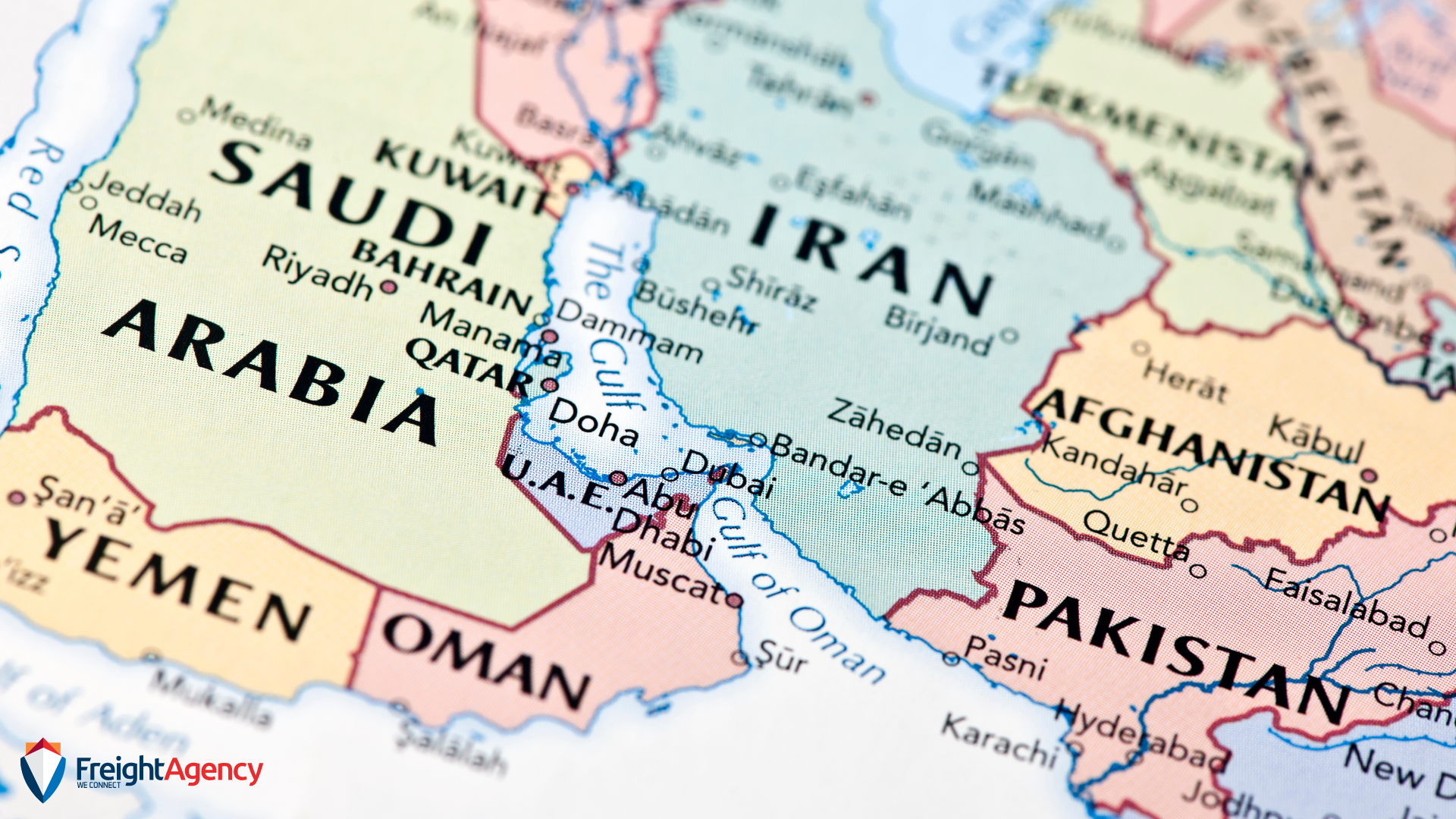
The Middle East remains a strategically important trade region for many businesses, but the current environment is also a reminder of how quickly shipping conditions can change. Recent disruption affecting Gulf shipping activity, pressure around the Strait of Hormuz, and wider uncertainty across regional trade routes have all reinforced the importance of careful planning, flexibility, and practical alternatives when moving cargo into the region.
At times like this, successful freight planning is not simply about moving cargo from origin to destination. It is about protecting lead times where possible, reducing exposure to disruption, and giving businesses practical options when established shipping patterns come under pressure. Recent reporting has highlighted longer and more complex cargo journeys, reduced marine fuel activity in Fujairah, and ongoing operational caution across Gulf shipping markets.
That is why routing flexibility matters.
A more flexible routing option for Gulf cargo
Through the Landbridge service via London Gateway, Freight Agency Limited can now support inland cargo movement to key Middle East destinations, including:
- King Abdullah
- Jeddah
- Dammam / Jubail
- Riyadh
- Bahrain
- Kuwait
- Qatar
- UAE
For customers shipping into the Gulf, this creates another practical route to consider when planning cargo movements into the region. It gives businesses added flexibility at a time when adaptability is becoming increasingly valuable in international logistics.
Why this matters in the current market
In stable conditions, routing decisions are often driven by efficiency, transit time, and cost. In a more uncertain environment, they also become a matter of resilience.
When regional shipping conditions tighten, businesses can face delays, revised schedules, cost pressure, and more complicated planning decisions. In that context, access to additional routing options is not just operationally useful. It can support better decision-making, stronger contingency planning, and greater supply chain confidence.
This is particularly relevant for exporters, importers, and supply chain teams whose customers, partners, or growth plans are tied to Gulf markets. The Middle East continues to offer strong commercial opportunity, but the present environment makes route review and planning discipline more important than ever.
The value of reviewing your current routing strategy
The current market is a good time for businesses shipping into the Middle East to review whether their existing routing strategy still offers the flexibility they need.
A few practical questions are worth asking:
- Is your current route still the best fit in today’s conditions?
- Do you have enough flexibility built into your shipping plan?
- Are there alternative options that could strengthen continuity if disruption increases?
- Are you balancing cost, timing, and resilience in the right way?
These are no longer just operational questions. They are commercial ones too.
How Freight Agency Limited can support
At Freight Agency Limited, we believe customers need more than cargo movement alone. They need options, clarity, and confidence.
Our ability to support inland cargo movement through the Landbridge service via London Gateway gives customers another practical option for shipments into key Gulf destinations. In the current environment, that additional flexibility can make a meaningful difference to planning and execution.
Final thoughts
The Middle East remains an important region for trade, but successful shipping into the market now depends on more than demand alone. It also depends on how well businesses plan for change, respond to uncertainty, and build flexibility into their supply chains.
For companies moving cargo into the Gulf, reviewing routing options is a sensible step. The right route can do more than move a shipment. It can help protect timelines, reduce pressure, and support more confident decision-making when market conditions are shifting.
Speak to us to discuss your shipment options